August 2026 Wisconsin Housing Market: What It Means for Southeast Wisconsin
The Wisconsin REALTORS Association (WRA) released its statewide numbers for August 2026, and the headline is a cooling one: home sales slid while prices kept climbing, and affordability hit a record low. Here’s what the data shows, and what it means if you’re buying or selling in Burlington, Waterford, Lake Geneva, Elkhorn, or anywhere else in our service area.
The Statewide Numbers
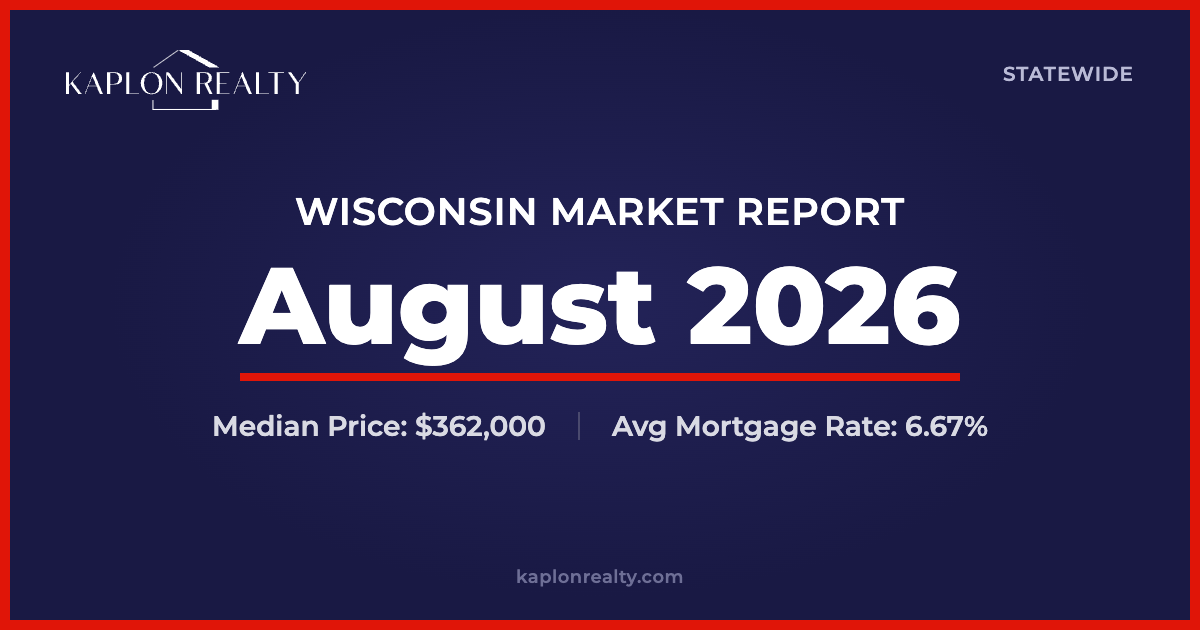
- Existing home sales fell 8.3% from August 2025, reversing the gains from June and July, while the statewide median price rose 7.1% to $362,000.
- Despite the August dip, year-to-date sales are up 3.2% and the year-to-date median price is up 7.3% to $348,838.
- Affordability fell 6.5% in August, the sixth straight monthly decline, and reached its lowest level since the WRA began tracking it in 2009.
- Inventory remains tight at 4.4 months of supply, which keeps the market tilted toward sellers.
- Mortgage rates averaged 6.67% in August, up from 6.05% in February.
Within the WRA’s Southeast region, August sales were down 9.2% from a year earlier, although conditions continue to vary significantly among individual counties, communities, and price ranges.
What This Means If You’re Buying
WRA CEO Tom Larson noted that statewide home prices are up by more than twice the rate of inflation over the last year, and mortgage rates have risen from 6.05% in February to 6.67% in August. That combination pushed affordability to its lowest level since the WRA began tracking it in 2009, and it hits first-time buyers who rely on financing especially hard. In our experience, the best response is to get your numbers pinned down before you shop: talk to a lender, know your real payment at today’s rate, and decide what you can flex on.
Widening your search across nearby towns can help too. That part is our own local observation, not a finding from the WRA report: we see real differences in price and competition between markets like Burlington, Waterford, and Union Grove, even with similar commute times.
The August decline in closings may signal some easing in activity, but competition will continue to vary substantially by location, price range, and property condition. Buyers sometimes find less competition and more seller flexibility during the fall and winter, although well-priced homes can still attract strong interest.
What This Means If You’re Selling
One month’s dip in closings doesn’t by itself show a change in the market. The statewide median price is still up more than 7% from a year ago, inventory remains at 4.4 months of supply, which the WRA says keeps the market tilted toward sellers, and WRA Chair Amy Curler noted that closings for the May through August peak season were the strongest since 2022. At the same time, affordability remains a challenge for many buyers. In our experience, that makes pricing strategy more important. Correctly priced, well-presented homes remain best positioned to attract buyers, while aspirational pricing can result in longer market times.
The Bigger Picture
WRA President and CEO Tom Larson pointed to rates as the pressure point, especially for first-time buyers, and hopes to see them ease as the market moves into the off-peak season.
On the supply side, Marquette University economics professor emeritus David Clark noted that months of inventory have improved year over year since the end of 2022, and that the trend should continue as aging Baby Boomers, now between 62 and 80, gradually leave single-family homes. In our view, neither trend is likely to change overnight, so it makes sense to plan around today’s conditions rather than waiting on a change.
Want this broken down for your specific situation? Contact us and we’ll walk through what these numbers mean for your neighborhood, your budget, and your timeline.
Source: Wisconsin REALTORS Association, August 2026 Wisconsin Real Estate Report.