May 2026 Wisconsin Housing Market: What It Means for Southeast Wisconsin
The Wisconsin REALTORS Association released its statewide numbers for May 2026, and the headline is a familiar one this year: sales cooled slightly while prices kept climbing. Here’s what the data actually shows, and what it means if you’re buying or selling in Burlington, Waterford, Lake Geneva, Elkhorn, or anywhere else in our service area.
The Statewide Numbers
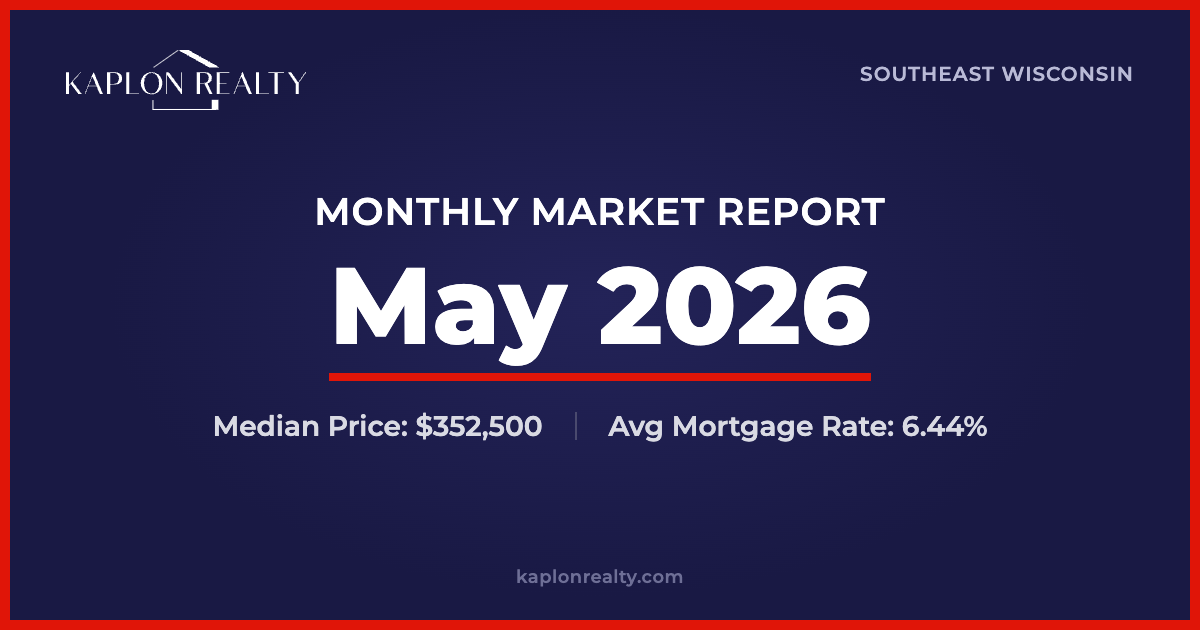
- Existing home sales fell 2.8% year over year in May, while the statewide median home price rose 6.8% to $352,500.
- Year-to-date sales are still up 2.6% compared to the first five months of 2025, with the median price up 6% to $334,000.
- Inventory remains tight at 4.1 months of supply — unchanged from May 2025 and still well below the six-month mark that defines a balanced market.
- New listings rose 0.8% and total listings rose 2.5% year over year, but buyer demand is still absorbing nearly everything that comes on the market.
- The average 30-year fixed mortgage rate was 6.44%, down from 6.82% a year ago, though rates have been drifting upward since February.
- Wisconsin’s Housing Affordability Index fell 2.4% over the past year to 124, reflecting rising prices and rates outpacing income growth.
What This Means If You’re Buying
The tightest competition right now is under $350,000 — exactly where most first-time buyers are shopping. Inventory above $500,000 is comparatively healthy, but that doesn’t help if your budget puts you in the entry-level range. If you’re searching in that bracket, widening your search across a few adjacent towns instead of locking onto one city is still the fastest way to find real options. We see this play out constantly between markets like Burlington, Waterford, and Union Grove — similar commute times and school quality, but meaningfully different competition for the same buyer.
Mortgage rates are better than they were a year ago, but the upward drift since February means waiting for a dramatically better rate isn’t a sure bet. If a home fits your budget today, financing conditions aren’t likely to get meaningfully easier in the near term.
What This Means If You’re Selling
Prices are still rising statewide, but the slight pullback in sales volume is a reminder that pricing discipline matters more than it did a year ago. With supply still under the six-month benchmark, well-priced homes in good condition are moving quickly — but overpriced listings are sitting longer and taking reductions, exactly as we’ve seen locally throughout this cycle. If you’re weighing whether now is the right time to list, the short version is: demand is still here, especially under $350,000, but the price has to be right from day one.
The Bigger Picture
Inflation ticked up to 4.2% in May — the highest reading since 2023 — though core inflation (which strips out food and energy) is running closer to 2.9%. That distinction matters because the Fed watches core inflation most closely, and it’s unlikely to cut rates meaningfully in the near term, but also unlikely to need to raise them. For buyers and sellers, that points toward more of the same: tight inventory, steady price growth, and rates that move in a narrow range rather than a sharp swing in either direction.
Want this broken down for your specific situation? Contact us and we’ll walk through what these numbers mean for your neighborhood, your budget, and your timeline.
Source: Wisconsin REALTORS Association, May 2026 Wisconsin Real Estate Report.